
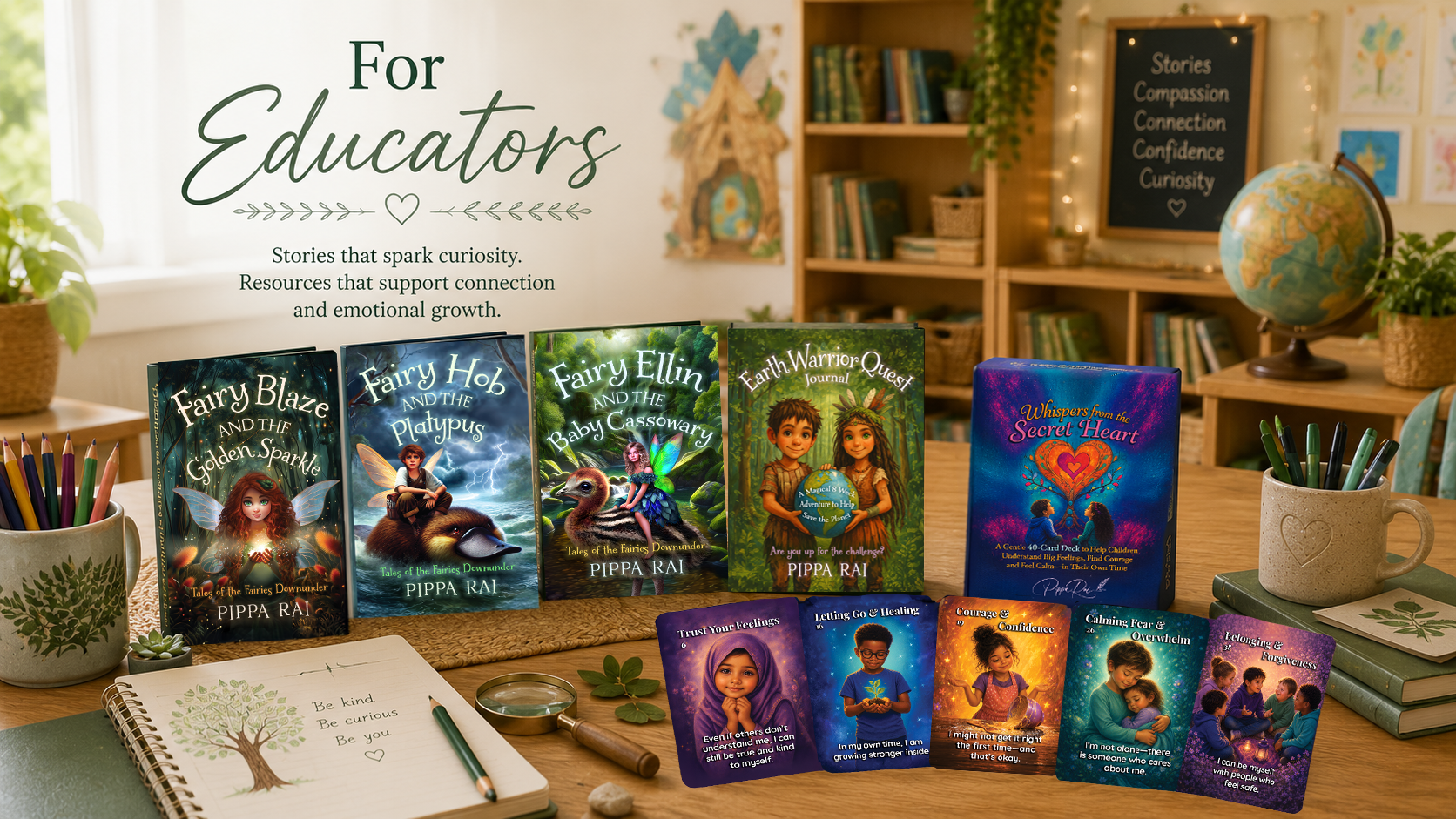
Bringing stories, imagination and emotional understanding into the classroom
Introduction
Pippa Rai’s stories invite children into imaginative worlds inspired by Australian wildlife, nature and adventure. While each book can simply be enjoyed for the story it tells, the characters, challenges and places within them can also provide natural starting points for classroom conversations, curiosity and creative learning.
Alongside the stories, Whispers from the Secret Heart offers a different kind of resource — gentle cards designed to help children explore feelings, build confidence and discover ways to support themselves, without pressure or expectation.
There is no single way these resources need to be used. Children might explore these questions through conversation, drawing, writing, imaginative play or quiet reflection. There is no expectation to share a personal experience. The ideas shared here are simply starting points that educators can adapt to suit their students, classroom and learning environment.
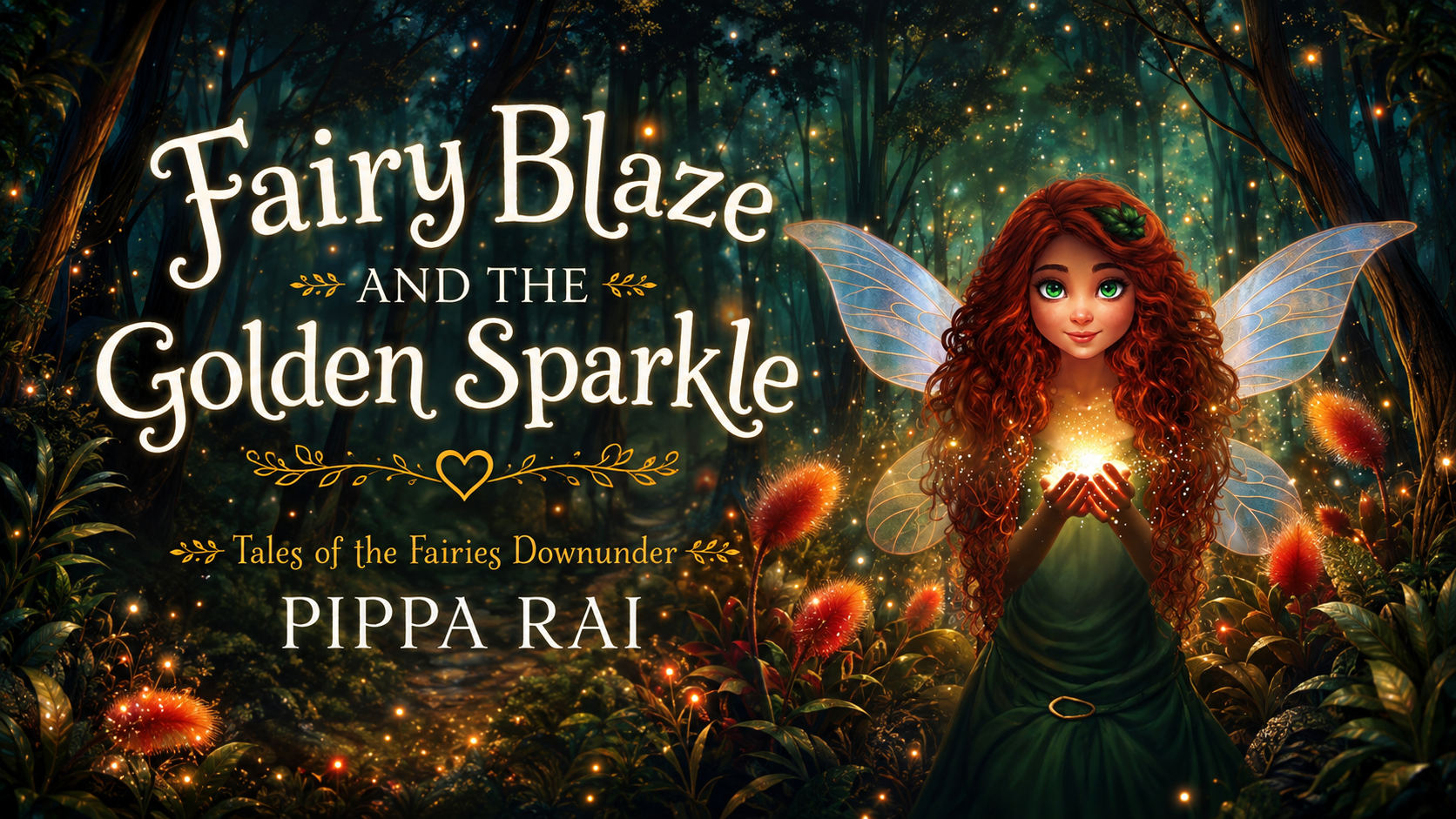
Fairy Blaze And The Golden Sparkle
Adventure, courage, friendship and discovery through the Australian landscape.
Fairy Blaze and the Golden Sparkle follows Blaze as she leaves her home in Tasmania on an important journey to help a drought-affected Eucalyptus Forest. Along the way she meets new friends, solves unexpected problems, and discovers that feeling nervous doesn't mean she can't also be brave.
Explore the stories
Ideas for classroom exploration
The story offers opportunities to explore:
Courage & confidence — feeling nervous about something new while still choosing to give it a try.
Friendship & teamwork — noticing when someone needs help and discovering what can happen when people work together.
Problem-solving & observation — following clues, sharing information and considering different possibilities.
Responsibility & independence — being trusted with something important and finding confidence along the way.
Australian geography — following Blaze's journey from Tasmania, across Bass Strait and towards New South Wales.
Australian wildlife & habitats — discovering animals including koalas, sugar gliders, masked owls, dolphins and rainbow lorikeets.
Nature & conservation — exploring the interconnectedness of forests, wildlife and plants, and why caring for the natural world matters.
Conversation Starters
Blaze sometimes felt nervous on her adventure but kept going. Can you think of a time you felt nervous and brave at the same time?
Blaze, Nirani, Elowen and Soren worked together to find the missing cricket band. What did each character bring to the group that helped them solve the problem?
The Golden Sparkle was used to help the Eucalyptus Forest after the drought. Why do you think looking after forests and the animals that live in them is important?
Blaze met lots of Australian animals and travelled through different places. Which animal or place would you most like to learn more about?
fairy hob and the platypus
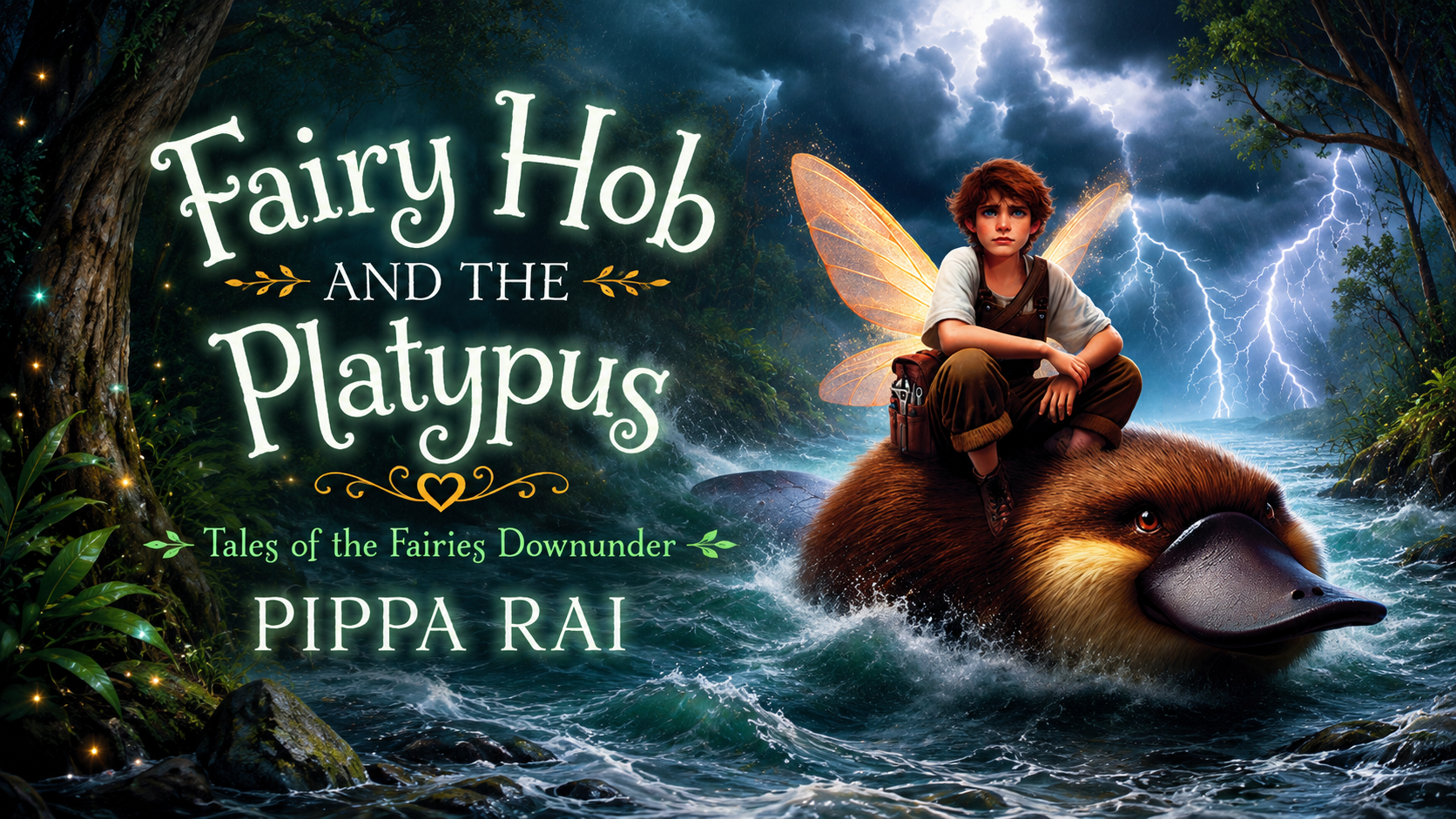
Adventure, problem-solving, friendship and teamwork along the Murray River.
Fairy Hob And The Platypus follows practical, inventive Hob as a building project takes him to River Sands, where an unexpected storm leads to new friendships and a challenge that calls for creative thinking and teamwork.
Themes to Explore
Problem-solving and creative thinking — Hob is a builder by nature. When he encounters a problem, he looks at what is available and thinks about what he can do.
Working together — saving Pax's home isn't presented as Hob being the lone hero. Hob specifically acknowledges that everyone achieved it together.
Helping and contributing — throughout the story, Hob uses his skills to help others, from repairing Bluebell's window to helping the village after the storm.
Friendship and community — Hob arrives at River Sands as a visitor but leaves having formed genuine friendships and feeling deeply connected to the community.
Australian wildlife and caring for habitats — Pax and the river setting provide a natural starting point for learning about platypuses, river habitats and other Australian animals that depend upon healthy environments.
Classroom Idea: Build a Home for Pax
After reading the story, invite children to imagine that Pax needs a new safe place to live beside the river.
Children could draw their design first, thinking about questions such as: Where would the entrance go? How could Pax get in and out? What would help keep his home safe if it rained? What natural materials might be around the river?
They could then create their design using blocks, cardboard, recycled materials, clay or natural materials collected from the school grounds.
The emphasis doesn't need to be on creating the “best” structure. Children can experiment, change their ideas and discover that there can be many different ways to solve the same problem.
Fairy ellin and the baby cassowary
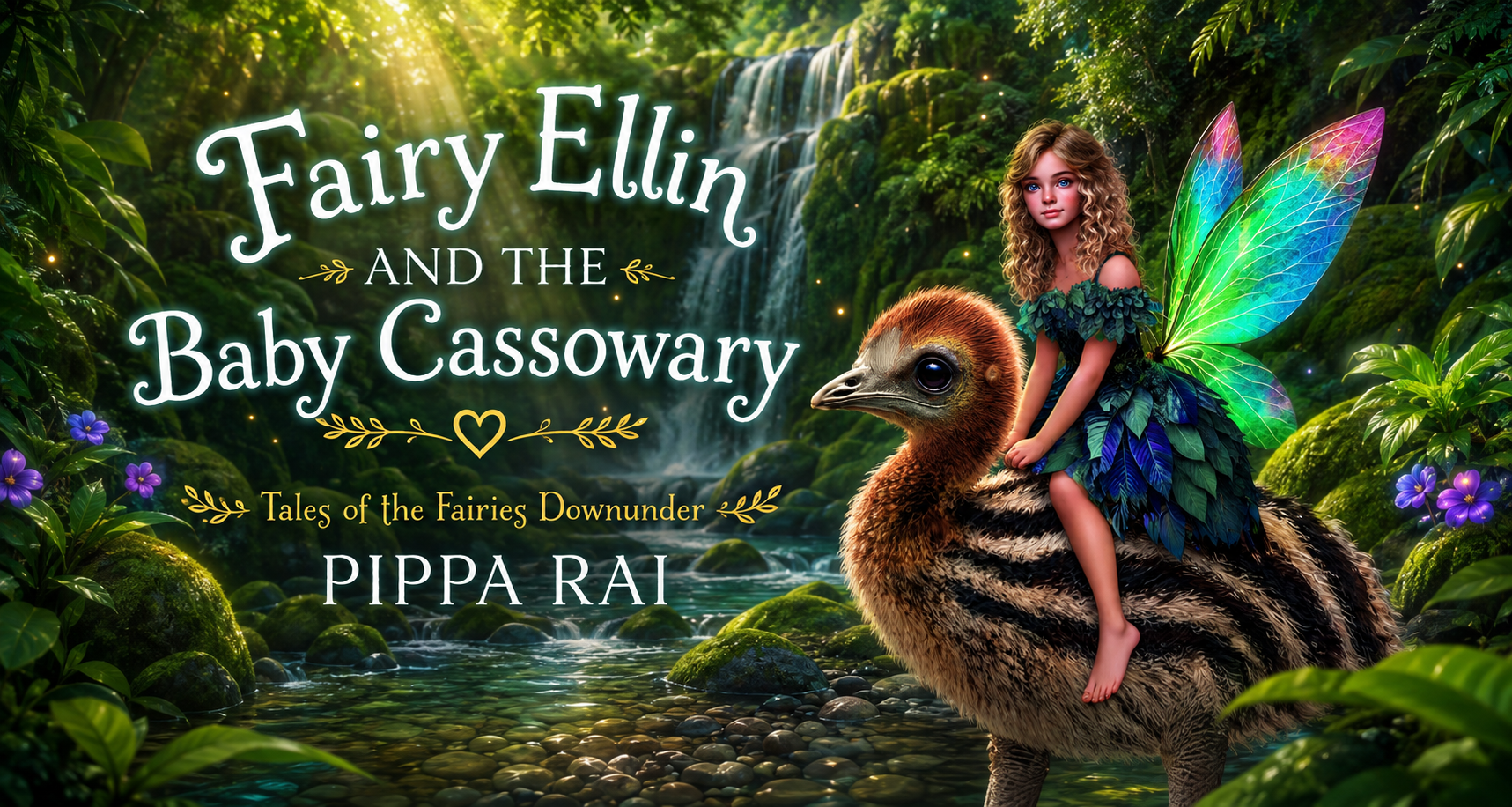
Kindness, conservation, Australian wildlife and discovering how everything in nature is connected.
Fairy Ellin And The Baby Cassowary follows Ellin through the magical Daintree Rainforest, where an unexpected encounter with a lost baby cassowary changes the course of her adventure. As Ellin helps Tuffy find his family, children discover the importance of caring for wildlife, protecting the natural world and understanding the special role every creature can play within its environment.
Ideas for Classroom Exploration
The story offers opportunities to explore:
Kindness & empathy — noticing when another person or animal may need help and considering what they might be feeling.
Australian wildlife — discovering cassowaries and some of the other fascinating creatures that live in the Daintree Rainforest.
Habitats & ecosystems — exploring what rainforest animals need to survive and how plants, animals and their environment are connected.
Conservation & caring for nature — considering why protecting wildlife and the places animals live is important.
The role of the cassowary — discovering how cassowaries help the rainforest by eating fruit and dispersing seeds as they move through their habitat.
Helping & problem-solving — looking at the different choices Ellin makes as she tries to help Tuffy find his family
Classroom Ideas
🌿 Create a Daintree Rainforest
Invite children to create a class rainforest display featuring some of the plants and animals Ellin encounters on her journey. Children could each choose one creature to draw or make and add a few facts about where it lives, what it eats and what it needs to survive. The finished display could show just how many different living things share the rainforest.🥭 Follow a Cassowary Seed
After discovering the important role cassowaries play in spreading rainforest seeds, children could illustrate the journey of a seed — from fruit growing on a tree, to being eaten by a cassowary, carried through the rainforest and eventually growing into a new plant.💚 Helping Tuffy
Ask children to think about the different moments when Tuffy needed something during the story. What clues helped Ellin work out whether he was frightened, hungry, lonely or needed help? Children could identify what Ellin noticed and the different ways she responded.
Earth Warrior Quest journal
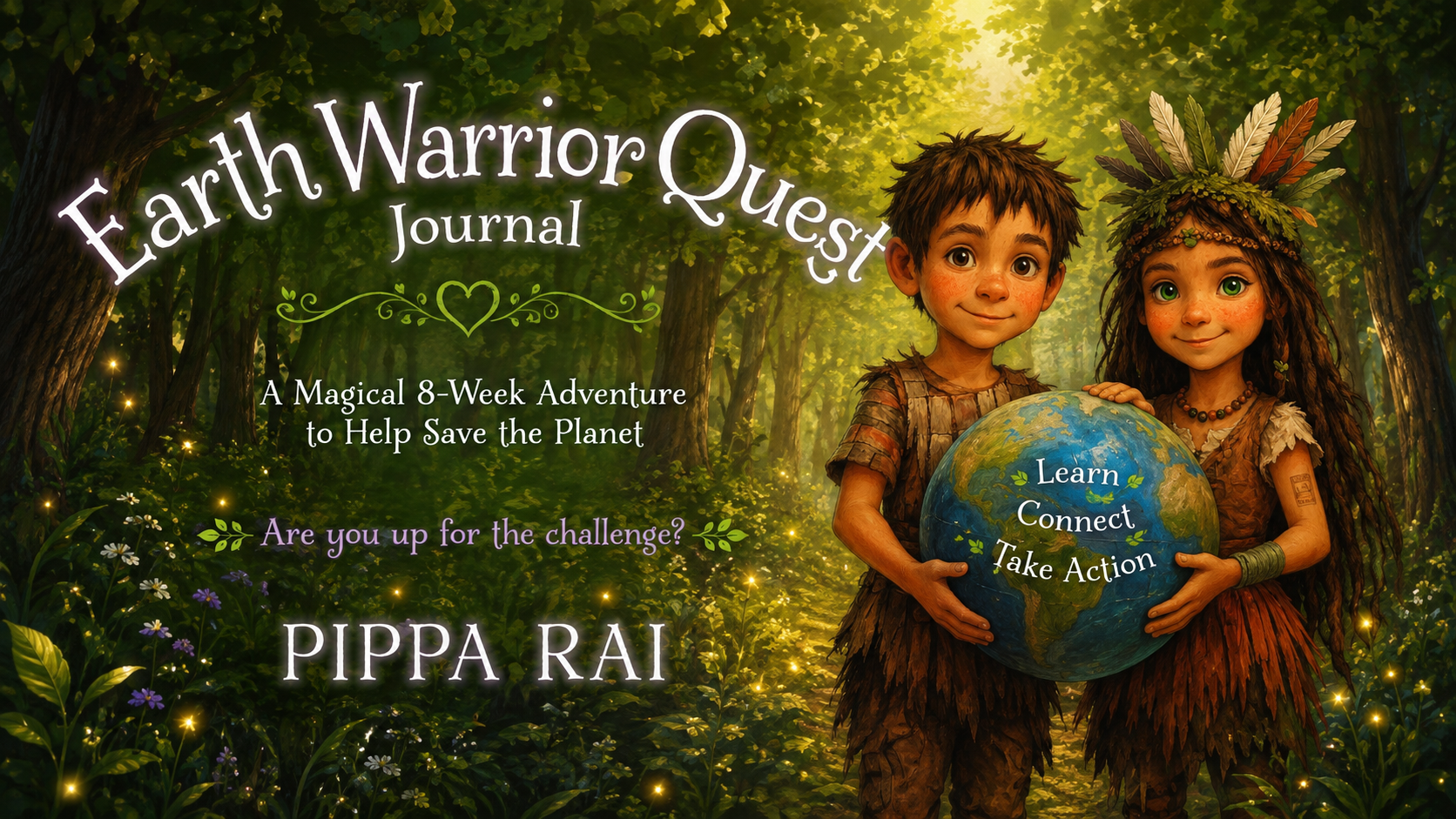
Nature, mindfulness, environmental awareness and emotional connection through an eight-week quest.
Earth Warrior Quest Journal takes children on an eight-week journey through eight Earth Quest Stones — Air, Animal, Earth, Heart, Sun, Star, Tree and Water. Each week combines five themed activities with opportunities for observation, creativity, mindfulness and reflection, encouraging children to build a deeper connection with themselves and the natural world.
CLASSROOM LEARNING OPPORTUNITIES
Nature & environmental awareness — encouraging children to notice, explore and develop curiosity about the natural world.
Emotional intelligence & empathy — creating opportunities to think about feelings, kindness, care and connection with other living things.
Mindfulness & reflection — providing gentle opportunities for children to slow down, observe, notice and reflect on their experiences.
Environmental responsibility — helping children discover small, achievable ways they can care for animals, plants and the planet.
Observation & curiosity — encouraging children to look more closely at everyday natural experiences such as wind, water, trees, animals, sunlight and the sky.
Creative expression — using drawing, making, imagining and written reflection to explore ideas and experiences in different ways.
Independence & personal reflection — allowing older children to work through activities independently, while younger children can complete them with teacher guidance.
Motivation & achievement — giving children a sense of progress as they complete each stage of the quest, earn their Earth Warrior badges and work towards their final certificate.
WAYS TO USE THE JOURNAL IN THE CLASSROOM
Follow the eight-week quest — work through one Earth Quest Stone each week, choosing from the five activities and reflections as the class progresses through Air, Animal, Earth, Heart, Sun, Star, Tree and Water.
Choose individual quests — the journal doesn't have to become a whole-class eight-week project. Educators can select activities that complement what children are already exploring in the classroom.
Explore together as a class — introduce an Earth Stone as a shared theme and choose particular activities, observations or reflection questions to explore together.
Use with small groups — selected quests can provide a focus for smaller groups, giving children opportunities to observe, create, discuss and reflect together.
Encourage independent exploration — older children may enjoy working through some activities and reflections independently, while younger children can be supported by an educator. The journal was designed to accommodate both approaches.
Take learning outdoors — many of the quests provide natural opportunities to step outside and notice the world directly, turning the school grounds or local environment into part of the learning experience.
Create moments for quiet reflection — the mindfulness prompts, drawing spaces and reflection questions can be used when the class would benefit from slowing down, observing and thinking rather than completing a traditional classroom task.
Celebrate the journey — children completing the full quest can collect their eight Earth Warrior badges as they progress and finish with the Earth Warrior Pledge and certificate, creating a lovely sense of achievement at the end of their journey.
Whispers from the secret heart
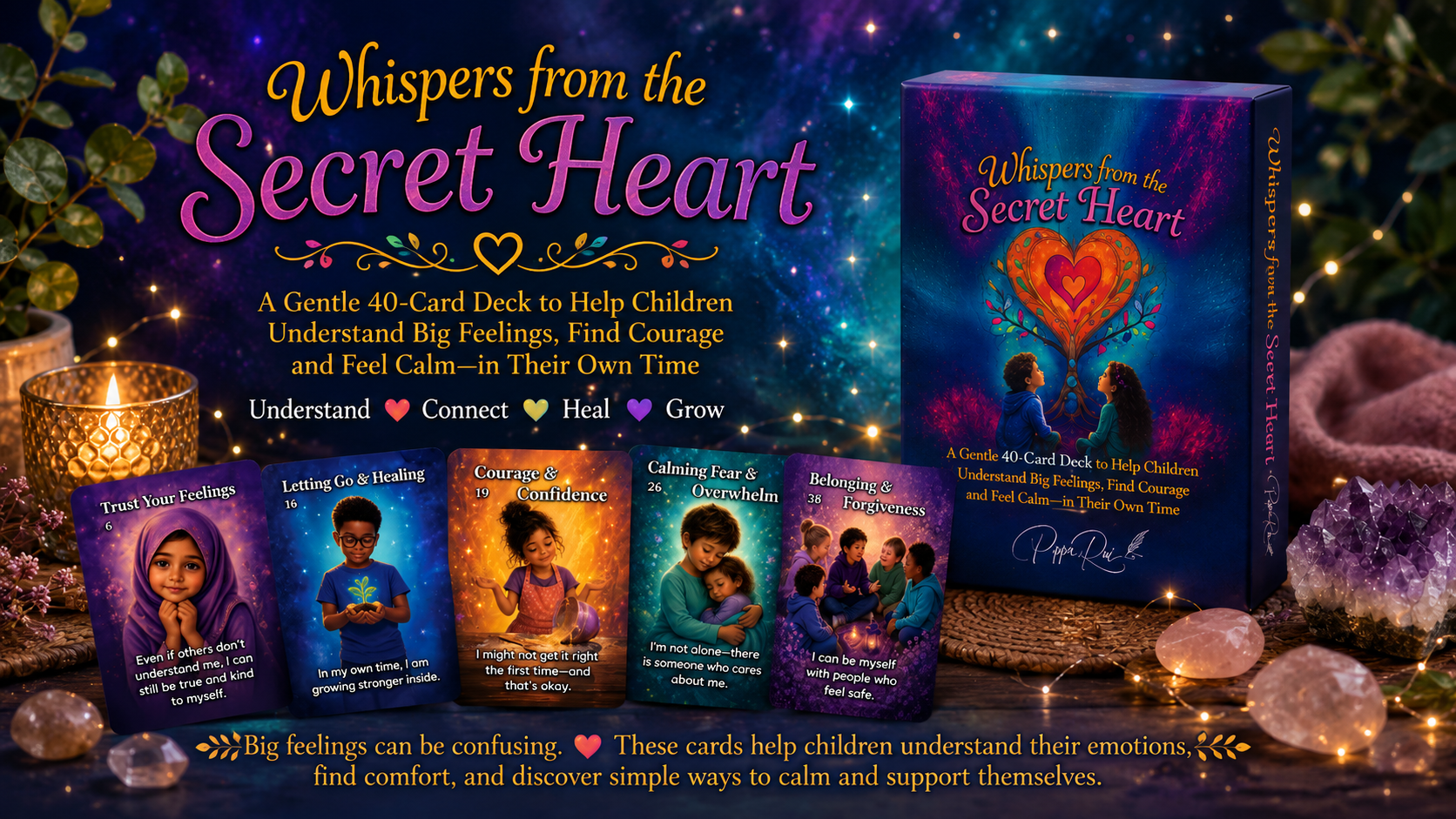
Gentle emotional support to help children understand feelings, find calm and build inner confidence.
Whispers from the Secret Heart is a gentle emotional support card deck created to help children explore and understand their feelings, build confidence and discover simple ways to find calm. Each card combines a reassuring message with a child-friendly reflection and practical idea, giving educators a flexible resource that can be used with individual children, small groups or as part of everyday classroom wellbeing.
Areas of Emotional Support
The 40 cards are organised across five themes, allowing educators to choose cards that may be relevant to the needs of a child or group at a particular time.
Trust Your Feelings — helping children notice, understand and trust what their feelings may be telling them.
Letting Go & Healing — gently exploring hurt, loss, difficult experiences and the process of feeling better over time.
Courage & Confidence — encouraging self-belief, perseverance and confidence when facing challenges or trying something new.
Calming Fear & Overwhelm — helping children recognise when things feel like too much and discover gentle ways to feel calmer and more settled.
Belonging & Forgiveness — exploring friendship, connection, acceptance, boundaries and repairing relationships.
Designed with Different Children in Mind
Whispers from the Secret Heart has been created with an understanding that children experience emotions, communication and support in different ways. The cards have been thoughtfully designed to be inclusive of neurodivergent children, including children with ADHD, autistic children and those with a PDA profile.
The language is gentle and choice-based, avoiding unnecessary demands or expectations about how a child should feel, respond or participate. Children are not required to identify an emotion, talk about a personal experience, answer a question or complete the suggested activity. A card can simply be offered as an invitation — and the child can decide what, if anything, feels helpful to them.
This approach can also benefit children who may need more time to process, find direct questions difficult, prefer not to talk about their feelings, or simply respond better when they are given space and choice.
Ways to Use the Cards in the Classroom
Quiet individual reflection — a child might choose a card themselves or be offered one to explore privately, without needing to share their thoughts or feelings with anyone else.
One-to-one conversations — a card can provide a gentle starting point when an educator is supporting a child who may be finding it difficult to explain what they are feeling.
Small group discussions — selected cards can be used to open conversations about feelings, confidence, friendship, belonging or coping with difficult moments, without asking children to disclose personal experiences.
Whole-class wellbeing — an educator might choose a card with a broadly relevant theme and use its message or reflection as the starting point for a general class conversation.
A quiet or calming space — the deck can be kept somewhere accessible so children have the option of looking through the cards when they would like a little space, reassurance or a calming idea.
Alongside situations that arise naturally — an educator might select a card relating to courage before something unfamiliar, belonging when discussing friendships, or calming overwhelm during a particularly busy time.
Simply as an invitation — sometimes a card doesn't need to lead anywhere at all. A child may read it, look at the picture, try the suggested idea or put it aside. The choice can remain with them.